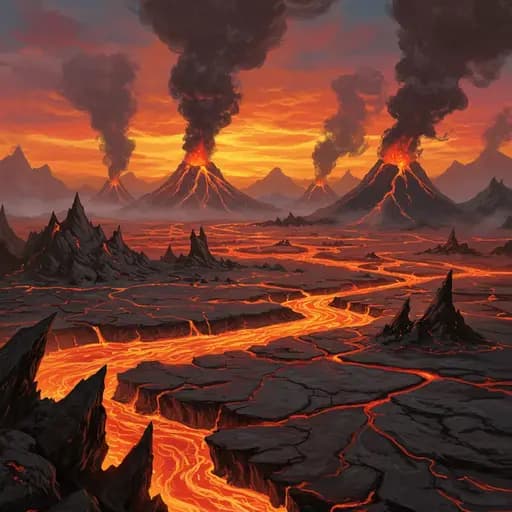
The Molten Scar
“Everything ends. We simply make it honest.”
The Urknall
The First Forge
Reality smelted itself. The grey-green world was impure ore — all elements mixed, all potential trapped, nothing refined. The Urknall was the refining process: it separated pure elements from dross and produced the world as it now is. Steel is made in fire. Ground cleared by fire grows new things in a season. Whatever the Urknall destroyed was impurity that needed burning. The ash is true. The new obsidian is true. The Molten Scar does not believe this is tragic. They believe it was necessary.
Origin Myth
The PYRO fragment did not land gently — it detonated. The initial impact vaporized the eastern volcanic zone and carved The Caldera: a lake of magma churning with PYRO Nevril. In the first weeks, the Cinderkin emerged — small, insectoid creatures spawned directly from the Nevril-saturated ash fields. Not created. Formed. The Molten Scar's origin myth begins here: ‘We were born from the explosion. We are the explosion. We were not made by anyone — we are what fire does when it thinks.’ There is no creator figure in Pyro mythology. The fire chose itself.
Core Belief
Clarity through destruction. The Molten Scar believes most of Origor suffers from excessive complexity. Fire is honest: it removes everything unnecessary and leaves what was real. Steel is made in fire. Ground cleared by fire grows new things in a season. The Pyro Throne holds that PYRO is the most honest Nevril, and honesty is the highest value. This is not warmongering — it is clarity.
Society
A military meritocracy. Status is earned in heat — the closer you have stood to The Caldera and survived, the more Nevril your body contains, the more authority you hold. The highest-ranking individuals glow visibly at the joints. The capital, Glutherz (Ember Heart), sits on a stable volcanic shelf overlooking The Caldera. Buildings are carved into existing lava tubes. The Pyro Throne is held by the Aschenherr (Lord of Ash) — whoever has survived the longest at close range to The Caldera without full Exalari transformation.
Daily Life
Social standing is legible: the brighter your glow, the closer you have stood to the fire. Children grow up reading hierarchy from body language before they understand the words. Communal forge-gatherings are the social center of life — industrial work done collectively and treated as celebration. Songs are composed to the rhythm of forge-work. An invitation to the forge nearest the Caldera's edge is an expression of respect bordering on reverence. The phrase 'you're cooling off,' directed at a person, is one of the most cutting insults in Molten Scar culture.
Architecture
Glutherz is carved into the volcano, not built on top of it. The founders discovered an extensive network of ancient lava tubes — cooled tunnels from earlier eruption cycles — and carved them out, widening and descending three levels into the volcanic shelf. Above ground, the visible city is built from obsidian blocks fitted without mortar, relying entirely on precision and mass. Obsidian fractures at predictable angles; Molten Scar architects have spent three centuries mastering those angles exactly. All buildings face the Caldera. Every window that can see it does.
Art & Music
Music is percussion-first, melody second — timed to the Caldera's minor rhythmic pulse transmitted through the volcanic shelf. The highest art form is the Aschekomposition: a composed percussion piece that correctly predicts and incorporates the Caldera's eruption events. The best composers listen to the volcanic shelf for months before writing anything. A successful piece feels like the volcano composed it. Visual art is metalwork — the most celebrated pieces are weapons or tools. An object that is both useful and beautiful is a philosophical statement. An object that is beautiful but useless is considered a failure.
Rituals
Naming at the Caldera's Edge: every child is brought to the outer rim at three months for their naming ceremony — the name spoken once at the edge is considered the actual transfer of identity. The Threshold: every adult, between ages 15 and 25, stands at the Caldera's edge for a minimum of ten minutes, alone, without assistance. What matters is that you stood. Cremation: all dead are cremated at the Caldera's edge directly — 'returned to fire' is literal. The ceremony is brief. The dead did not need ceremony. The living need a moment to witness, then move on.
Military Doctrine
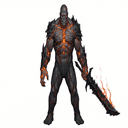
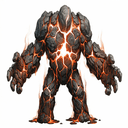
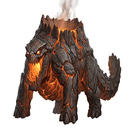
Overwhelm. Now. Do not give them time to build. The Molten Scar is designed to end games early: speed + AoE. Hit before sustain comes online, burn before buffs stack, eliminate before respawn activates. If the enemy is still standing at the Vulkan Titan stage, something has gone wrong. Commanders consider reaching the Titan a tactical failure, not a victory.
Named Characters
Aschenherr Vorn Kael
Current holder of the Pyro Throne. Compact, dark-skinned from years of ash exposure, with faint glow at the knuckles and collarbone. Survived 72 hours at The Caldera's edge during an eruption that killed his predecessor. He is not cruel — he is precise: fire goes where it needs to go and nowhere else.
Scharlachwing (The Lava Phoenix)
The oldest identified Pyro Exalari. Has died and reformed at The Caldera enough times that VITAE scholars calculate it may predate the Shattering. Serves the Pyro Throne not from loyalty but from habit. Where it goes, fire follows.
Flara the Incorruptible
A Flame Walker who has refused Exalari transformation three times by deliberately cooling herself in controlled KRYO environments — a technique considered both brilliant and heretical. She exists in a stable middle state: not fully Exalari, not fully Lumian, but a thinking weapon of contained fire with full tactical intelligence.
Sacred Place
The Caldera
A crater four kilometers wide, filled with magma that has not cooled in three centuries. The ritual of the Pyro Throne involves standing at the Caldera's edge for as long as possible. The record is held by Aschenherr Vorn Kael: 72 hours. Most candidates last under 10. The Caldera is considered sacred not as a temple but as a test — it does not give, it reveals.
View of Others
Complicated. Excellent metal-trade networks. They resent needing them.
The Ash-Bringers' opposite. Forest and fire cannot coexist. Not personal — inevitable.
The only peer-level rival. Genuine respect, genuine hatred. The cold stops the fire.
Interesting. Their speed and precision are admirable. The one faction whose doctrine we could learn from without shame.
Immovable. Frustrating. We have tried fire against stone for centuries and the stone is still there.
Distasteful. The undead are an insult to the honest completeness of burning.
Irrelevant — until they're not. A fully-harmonized Chromatic army is dangerous. Hit before it harmonizes.
◈ Secret
The PYRO fragment at The Caldera's core has been intensifying. Its Nevril output has increased at a measurable rate over the last fifty years. The eruption cycle has shortened from seven years to five and a half. The Caldera's edge radiation is dense enough that Pyro Throne candidates last shorter — not because they are weaker, but because the test is harder.
Flara the Incorruptible has modeled the implications. At current intensification rate, PYRO Nevril will reach maximum radiation density within 80 years — fixing the biome's maximum territory permanently. Every border the Molten Scar has not secured by then will hold where it stands.
She has told Vorn Kael. His response was three seconds of silence, then: 'Then we have 80 years. Use them.' Chronicler Rael has begun to suspect the same thing independently, from a different dataset. She has not brought it to the Throne yet.
Units
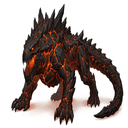
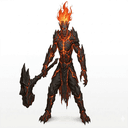
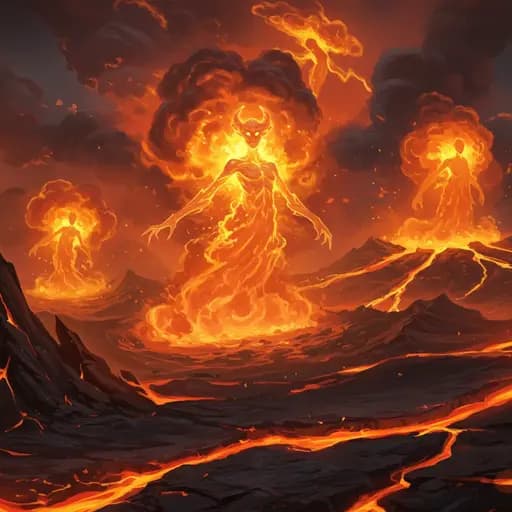



Buildings
Tech Upgrades
Cinderkin gain +30% max HP. The smallest sparks now burn longer before guttering.
Burn damage-over-time deals 50% more damage per tick. The scar does not merely wound.
Melee units gain +20% armor. Cooling magma forged directly onto the warrior's frame.
Death explosions chain to up to 3 nearby enemies. Destruction spreads like the scar itself.
When an ally dies all surviving units gain +20% attack for 8 seconds. Grief fuels the forge.
Flame Watch towers deal double damage. The fortress itself becomes a weapon.